

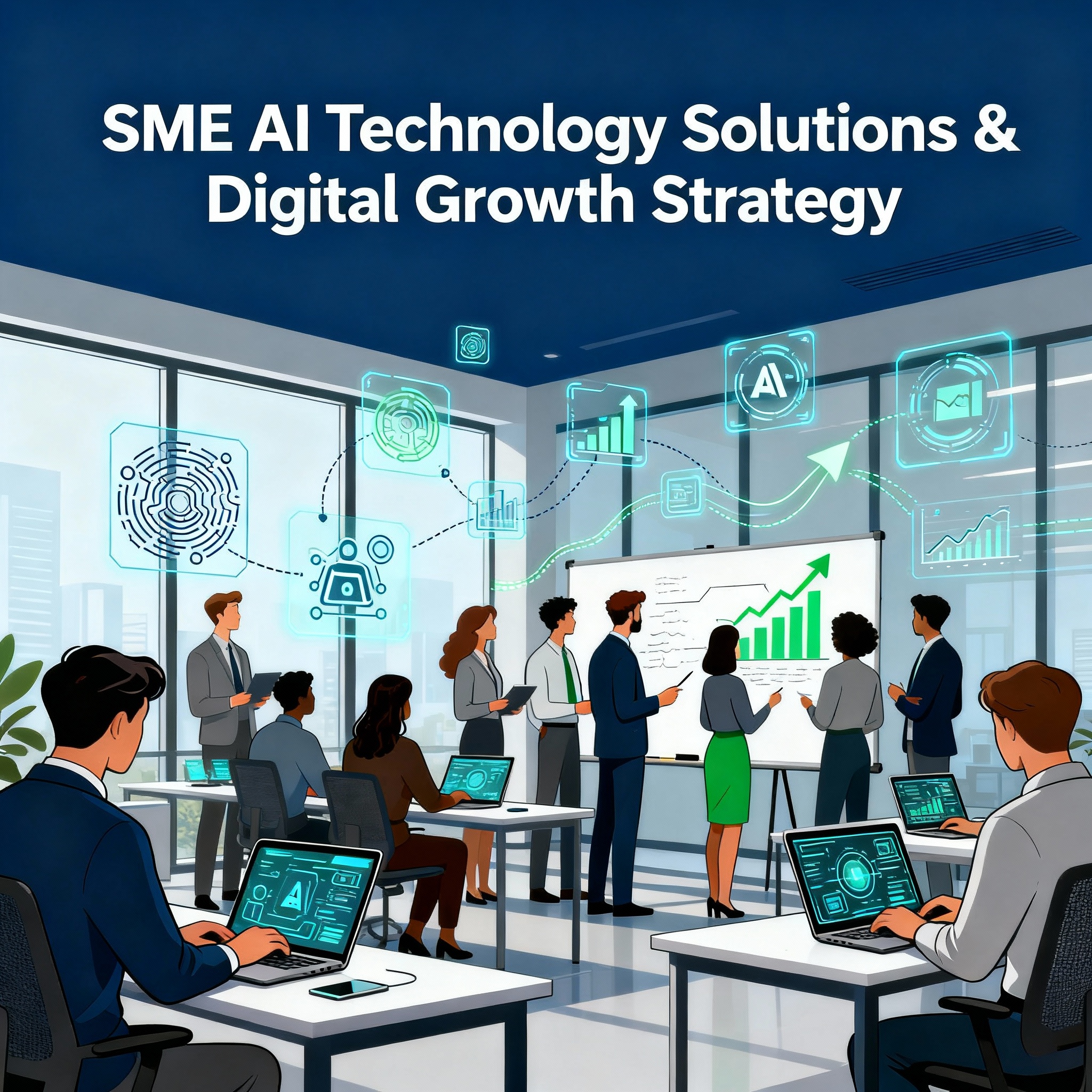
Artificial Intelligence (AI) is no longer a futuristic concept reserved for large enterprises. In 2025, small and medium-sized enterprises (SMEs) are discovering that AI can be their most powerful growth driver. From automating daily tasks to unlocking customer insights, AI is helping SMEs compete with larger players on a more level field. The question is no longer if SMEs should adopt AI — but how they can make it a central part of their business strategy.
1.Understanding the Role of AI in SME Growth
AI isn’t just about robotics or complex algorithms — it’s about making smarter decisions with data. For SMEs, AI can:
- Automate repetitive tasks like billing, scheduling, and inventory updates.
- Enhance customer experience through chatbots, personalization, and predictive recommendations.
- Improve marketing ROI by analyzing customer behavior and optimizing campaigns.
- Support smarter financial forecasting and supply chain management.
By integrating AI tools into daily operations, SMEs can operate more efficiently, reduce costs, and scale faster without heavily increasing headcount.
2.Start Small but Think Big
One of the biggest mistakes SMEs make is thinking AI adoption requires huge budgets or technical teams. The truth is, many affordable AI solutions are available through cloud-based platforms like Microsoft Azure, Google Cloud AI, or OpenAI APIs.
Start by identifying one key pain point — such as customer service or marketing — and experiment with an AI-driven solution. Once it proves valuable, expand its use to other departments.
This “start small, scale fast” approach ensures that AI delivers measurable value without disrupting operations.
3.Focus on Customer-Centric AI Applications
Customers are the lifeline of every SME. AI can help businesses understand, predict, and engage with customers better than ever before.
- Chatbots can handle basic inquiries 24/7, improving response times and satisfaction.
- Recommendation engines can personalize product suggestions, increasing conversion rates.
- Sentiment analysis tools can monitor brand perception on social media.
By using AI to understand customer needs, SMEs can deliver more meaningful experiences — and that leads directly to loyalty and long-term growth.
4.Empower Employees with AI Tools
AI isn’t here to replace people — it’s here to empower them. Training employees to use AI tools enhances productivity and innovation.
For example:
- Sales teams can use AI-powered CRMs to prioritize high-value leads.
- Marketing staff can leverage AI analytics tools to identify the most effective ad campaigns.
- HR teams can use AI recruiting tools to find the best talent faster.
When employees understand AI’s potential, they become active participants in driving the company’s digital transformation.
5.Data Is the Fuel — Start Collecting It Now
AI thrives on data. SMEs must prioritize collecting and managing their business data responsibly. This includes sales records, customer interactions, and website analytics.
Using structured and clean data allows AI algorithms to identify patterns and make accurate predictions. Partnering with data consultants or investing in AI-ready software can help SMEs get their data foundation right — a crucial step before scaling AI adoption.
6.Collaborate and Outsource Smartly
Not every SME needs an in-house AI expert. Collaborating with AI startups, digital agencies, or using third-party AI services can significantly reduce costs and complexity.
Many AI-as-a-Service (AIaaS) models now offer pay-as-you-go solutions — ideal for smaller companies aiming to stay agile while accessing cutting-edge technology.
7.Measure, Optimize, and Scale
Finally, SMEs must track AI’s impact using metrics like cost savings, time efficiency, and customer satisfaction.
If an AI solution improves performance, it can be scaled to other areas. Continuous improvement ensures that AI remains a core growth strategy — not just a one-time experiment.
Conclusion
In today’s competitive digital economy, adopting AI isn’t optional for SMEs — it’s essential. By starting small, focusing on customer value, and using AI to empower people rather than replace them, small businesses can create scalable, data-driven growth.
AI transforms SMEs from being reactive to proactive — helping them not only survive but thrive in an era where intelligence defines success.