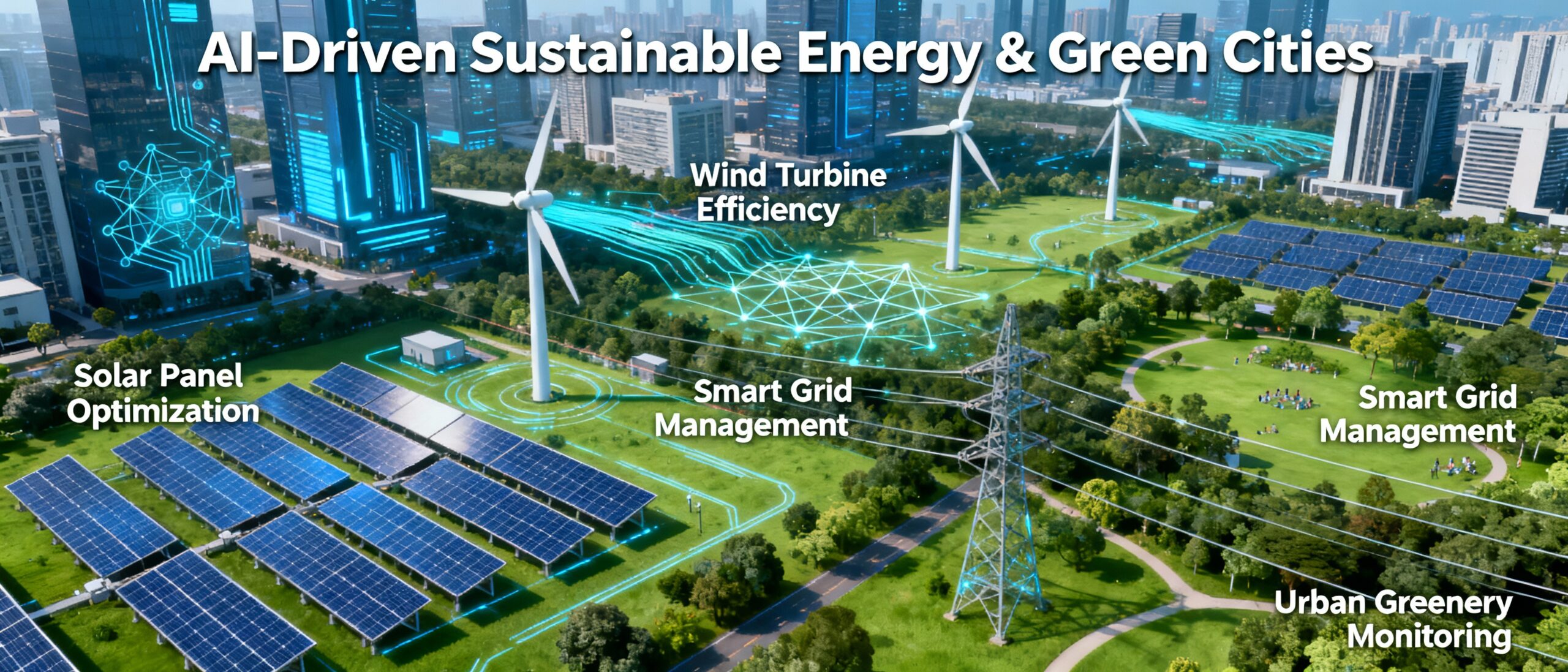
Artificial Intelligence (AI) has become the driving force behind the modern digital world — from self-driving cars to voice assistants like Alexa and ChatGPT. But as AI systems grow more powerful, they also consume enormous amounts of energy. Data centers that train and run AI models use massive computing power, leading to high carbon emissions.
This is where Green AI comes in — a revolutionary concept focused on creating energy-efficient, environmentally conscious, and sustainable AI systems. As countries push toward net-zero emissions and eco-friendly innovation, Green AI is quickly becoming a global technology trend that not only saves the planet but also opens new opportunities for businesses, startups, and researchers.
What Is Green AI?
Green AI refers to designing and deploying artificial intelligence technologies that minimize energy consumption and reduce their environmental footprint.
Traditional AI — sometimes called “Red AI” — focuses mainly on performance and accuracy, often ignoring the cost of computation. For instance, training one large language model (like GPT or BERT) can emit as much carbon dioxide as five cars over their lifetimes.
Green AI aims to change that by using optimized algorithms, low-power hardware, and renewable energy sources. It’s about creating smarter AI systems that are both powerful and sustainable.
Why the World Needs Green AI
The demand for AI-powered solutions is growing rapidly — from smart cities and healthcare to logistics and entertainment. However, this growth comes with challenges:
1.High Energy Consumption:
AI models require huge amounts of electricity to process data and make predictions.
2.Data Center Emissions:
The global data center industry already accounts for over 2% of total CO₂ emissions, rivaling the aviation sector.
3.E-Waste Concerns:
Frequent hardware upgrades for AI training create tons of electronic waste.
Green AI seeks to balance innovation with responsibility. It ensures that AI progress does not come at the cost of the planet.
How AI Is Powering Sustainability
Ironically, while AI can harm the environment through its own energy use, it’s also one of the most powerful tools for fighting climate change. Here are some real-world examples:
1.AI in Climate Prediction:
Machine learning models are being used to predict weather patterns, track wildfires, and model climate scenarios. Companies like IBM and Google are developing AI-driven tools that forecast extreme weather and help governments prepare.
2.Smart Energy Management:
AI systems monitor and optimize electricity use in real-time. For instance, Google’s DeepMind reduced energy use in its data centers by 40% using AI-powered cooling optimization.
AI in Agriculture:
Farmers use AI drones and sensors to monitor crop health, reduce water waste, and increase yield — helping fight hunger and reduce resource consumption.
Sustainable Transportation:
AI algorithms are improving traffic flow, reducing emissions, and even designing eco-friendly logistics routes for delivery vehicles.
Green AI in Business and Industry
Businesses worldwide are adopting Green AI strategies not only to go eco-friendly but also to cut costs and attract environmentally aware customers.
- Tech giants like Microsoft, Amazon, and NVIDIA are investing heavily in AI systems powered by renewable energy.
- Startups are building carbon-efficient AI models that use less data and smaller computational resources.
- Manufacturing companies are using AI to reduce waste and energy consumption in production lines.
This new wave of innovation is creating a multi-billion-dollar global market for sustainable AI technology.
How You Can Be Part of the Green AI Movement
Green AI isn’t just for big tech companies — developers, entrepreneurs, and even content creators can participate in this movement. Here’s how:
1.Use Cloud Platforms That Run on Renewable Energy:
Many cloud providers now offer carbon-neutral AI training services. For instance, Google Cloud and AWS have data centers powered by renewable energy.
2.Optimize Your AI Models:
Use techniques like model compression, quantization, and pruning to reduce computation needs.
3.Promote AI for Environmental Solutions:
Whether it’s a blog, startup idea, or community project, promoting the positive side of AI helps spread awareness globally.
4.Support Ethical AI Research:
Encourage or contribute to open-source AI projects that focus on transparency, efficiency, and sustainability.
Future of Green AI
The next decade will likely see AI regulation and sustainability policies become global priorities. Governments and international organizations are already drafting AI energy standards.
In the near future, companies may even need to disclose the carbon footprint of their AI systems — similar to how products list their energy efficiency ratings.
Moreover, innovations like neuromorphic computing, quantum AI, and edge AI could drastically reduce energy usage, making Green AI the default standard for all industries.
Conclusion
Green AI represents the intersection of innovation, ethics, and environmental responsibility. It’s not just a technological shift — it’s a global movement toward a sustainable digital era.
As the world increasingly depends on artificial intelligence, the call for greener, more responsible AI solutions will only grow louder. For businesses, creators, and researchers alike, embracing Green AI isn’t just the right thing to do — it’s the smartest way to build the future.