

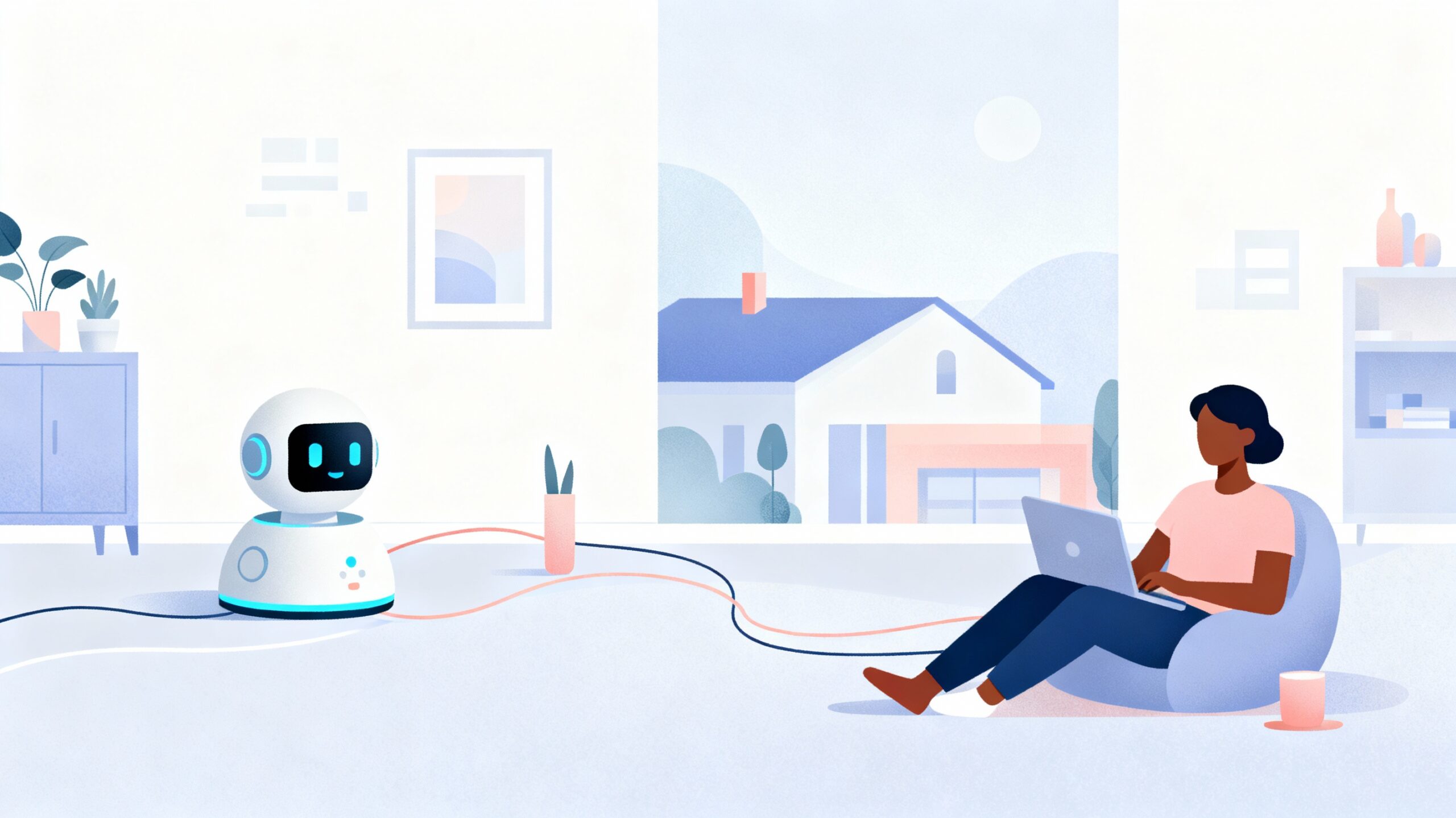
Artificial Intelligence (AI) has transitioned from a futuristic buzzword to an everyday reality. Once confined to laboratories and research institutions, AI now powers devices, tools, and decisions that shape how we live, work, and think. Whether it’s the recommendation you get on Netflix, the chatbot answering your online shopping questions, or the navigation app guiding your daily commute, AI is silently but steadily becoming the backbone of modern society.
This integration isn’t happening through grand, sci-fi robots or world-changing events. Instead, AI’s transformation is quiet, practical, and incredibly personal—making it one of humanity’s most powerful silent revolutions.
From the First Alarm to the Final Scroll
AI touches each part of the human day, often without us realizing it. Consider mornings: your smartphone studies your sleep data through sensors and suggests the best time to wake up for maximum rest. Smart assistants like Alexa and Google Assistant not only set alarms but also learn routines. Over time, they know when to turn on lights, play favorite news briefings, or even adjust the room temperature.
Apps that plan grocery lists, track workouts, or analyze spending patterns also run on machine learning algorithms. They process millions of data points to understand behavior and deliver custom suggestions. In short, AI has turned the smartphone into a personal life manager.
By the time we head to work, AI has already optimized routes through traffic apps like Google Maps or Waze. These tools don’t just show the shortest path; they make split-second calculations using data from millions of vehicles on the road. Each suggestion is powered by constant learning—a hallmark of modern AI.
AI in the Modern Workplace
The workplace is another frontier where AI’s impact is profound. From automating routine tasks to powering strategic decisions, AI has changed how professionals approach productivity. Tools such as ChatGPT, Jasper, and Notion AI assist in writing, brainstorming, scheduling, and summarizing reports—tasks that once consumed hours.
Customer service departments use AI-powered chatbots to provide 24/7 support. These systems improve continuously by analyzing customer sentiment and learning from each interaction. In marketing, algorithms analyze consumer data to recommend targeted campaigns, predict trends, and even tailor advertisements based on behavior and emotion.
For business owners, AI analytics software has become a game-changer. It allows entrepreneurs to interpret massive amounts of data instantly—predicting market trends, identifying opportunities, and minimizing financial risk. This means decision-making no longer depends on guesswork; it’s grounded in data-backed clarity.
Even small and medium enterprises (SMEs) in developing regions are adopting AI for tasks like inventory control, sales forecasting, and digital communication. The rise of AI-as-a-service (AIaaS) has made advanced technologies affordable and scalable, bringing enterprise-level intelligence to small businesses.
The Homefront: AI and Domestic Intelligence
Homes are now smarter, safer, and more energy-efficient thanks to AI. Smart home systems integrate with appliances, lighting, and security devices to understand and respond to user preferences. A thermostat might learn your temperature comfort, while a refrigerator tracks food expiry or suggests recipes based on available ingredients.
Voice recognition, natural language processing, and sensor technologies have made human-machine communication intuitive. As these systems evolve, they anticipate needs rather than merely responding to commands. The result is a home that not only listens but learns.
AI-driven security systems also add layers of protection. Facial recognition helps identify residents and alert homeowners to unusual activity. Combined with real-time analytics, these systems promise a level of personalization and safety unimaginable a decade ago.
Entertainment, Travel, and Leisure
Entertainment platforms like Netflix, YouTube, and Spotify have perfected personalization with AI. Their recommendation systems analyze viewing and listening habits to predict what users want next. Every movie recommendation or playlist is the product of deep learning models that interpret tone, pace, and context in content.
In gaming, AI is redefining player experience. Instead of following predictable scripts, modern AI-driven non-playable characters (NPCs) adapt to player actions, making each session unique. Esports developers now rely on AI to design fairer, more dynamic competition environments that continually self-balance based on player skill levels.
AI also makes travel smoother—from ticket recommendations to real-time translation apps. Even flight scheduling and hotel pricing depend on algorithms that constantly learn from market fluctuations and traveler behavior.
Healthcare and the Human Touch
Perhaps no field demonstrates AI’s potential for good more than healthcare. AI models can now detect diseases earlier and more accurately than many traditional diagnostic methods. For instance, image recognition algorithms identify early signs of cancer or retinal damage. In hospitals, AI-powered robots assist surgeons by providing precise, real-time insights during operations.
Beyond clinical use, wearable health devices use AI to monitor heart rates, sleep cycles, and physical activity. By gathering continuous streams of biometric data, these devices enable predictive analysis, alerting users to potential health issues before they worsen.
However, the power of medical AI raises ethical questions about privacy, data ownership, and the limits of automation. While automation can support doctors, the human element—empathy, understanding, and judgment—remains irreplaceable.
The Future of Everyday AI
The future of AI lies in invisibility—the less we see it, the more it integrates. Autonomous vehicles will soon eliminate traffic stress; AI tutors will personalize education; emotion-aware assistants will adapt conversations to human mood. The shift won’t be about replacing humans but augmenting them.
Still, the growing dependence on AI demands thoughtful oversight. Ethical use, transparency in data handling, and fairness in algorithms must remain priorities. Governments worldwide are moving toward AI regulation frameworks to ensure this balance—encouraging innovation without compromising human values.
Across all these developments, AI is not a distant future technology—it’s today’s invisible force that reshapes how society operates. It learns, adapts, and evolves with each interaction, reflecting the collective intelligence of its users.
Conclusion
Artificial intelligence represents the most human kind of progress—not replacing creativity, but extending it. From managing morning routines to decoding medical mysteries, AI works quietly in the background, improving life one algorithm at a time.
As people embrace this silent revolution, the challenge will be defining how humanity and machines coexist. If guided responsibly, everyday AI won’t dominate—it will empower, enhance, and redefine what it means to live in a truly intelligent world.