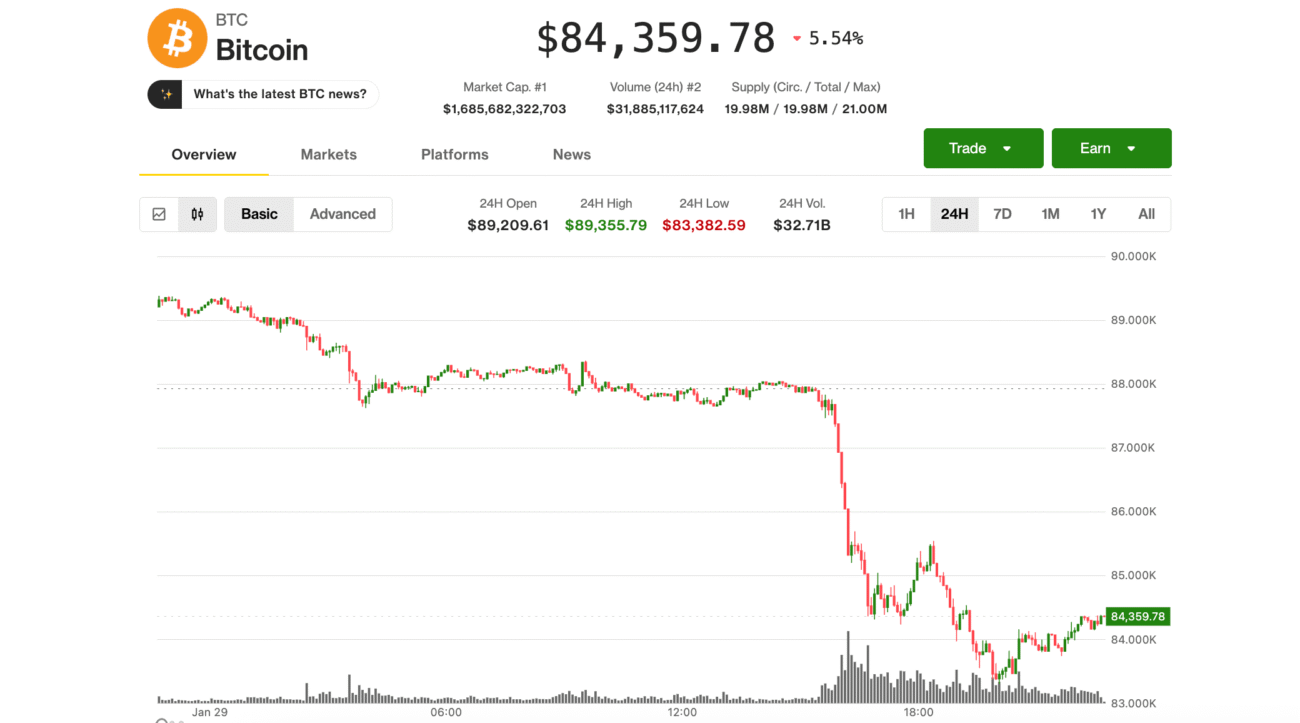
Bitcoin’s meteoric rise in 2025 just hit a major roadblock. After touching record highs earlier this year, the world’s largest cryptocurrency has plunged to $107,000, marking its sharpest weekly decline since early 2024. The sell-off has triggered widespread concern among traders and investors, many of whom are now bracing for a potential fall to $88,000 if market conditions don’t stabilize soon.
The dramatic price correction has left many wondering — what caused this sudden crash, and is the bull run officially over?
1.Profit-Taking and Whale Activity Triggered Heavy Selling
According to on-chain data, Bitcoin whales — large investors holding thousands of BTC — have been offloading significant portions of their holdings over the past two weeks. Analysts believe this profit-taking wave began when BTC crossed the $115,000 level, sparking a domino effect of sell orders across major exchanges.
“Whales took advantage of the overbought conditions,” said Elliot Marks, senior analyst at London-based crypto research firm CoinPulse. “Once BTC slipped below $110,000, stop-loss triggers accelerated the decline, deepening the panic.”
2.Rising U.S. Bond Yields and Strong Dollar Pressure Bitcoin
Another key factor behind the drop is the rising strength of the U.S. dollar and surging Treasury yields. As bond yields climbed to their highest level in over a year, investors began shifting capital from high-risk assets like Bitcoin into safer government securities.
In the UK and European markets, a stronger dollar has also weakened crypto inflows. “With the Federal Reserve signaling no rate cuts until mid-2026, the macro backdrop is turning risk-off,” said Liam Harris, market strategist at Crypto Insights UK.
3.ETF Inflows Cool Off After Record Highs
The enthusiasm around Bitcoin Spot ETFs, which helped fuel the 2025 rally, appears to be cooling. U.S. ETF inflows fell by nearly 60% in the last two weeks, indicating waning retail and institutional interest.
Data from Bloomberg Intelligence shows that the largest ETF providers, including BlackRock and Fidelity, saw significant outflows as Bitcoin’s volatility spiked.
“ETF-driven demand was the backbone of Bitcoin’s surge to $125K,” noted CryptoQuant analyst Sarah Kline. “Now that momentum is fading, we’re seeing the market recalibrate.”
4.Technical Breakdown Sparks Fear of Further Losses
From a technical standpoint, Bitcoin recently broke below its 200-day moving average, a crucial support line that traders often use to gauge long-term trend direction. The next major support zone sits near $88,000, a level that could determine whether Bitcoin resumes its uptrend or slips into a prolonged correction.
“If BTC closes below $100,000 this week, we could see an accelerated move toward $88,000,” warned FXStreet technical strategist Daniel Lee. “Momentum indicators are flashing strong bearish signals.”
5.Market Sentiment Turns Cautious — But Not Hopeless
Despite the fear dominating social media and crypto forums, some experts remain cautiously optimistic. They argue that Bitcoin’s long-term fundamentals — such as institutional adoption, scarcity, and halving effects — remain intact.
“This correction may actually be healthy,” said Bitwise Capital’s chief economist Laura Jensen. “Every bull cycle has mid-cycle pullbacks of 20–30%. Long-term holders shouldn’t panic — but new buyers should tread carefully.”
What Could Happen Next
If Bitcoin stabilizes above $100,000, analysts expect a short-term rebound toward $115,000 as bargain hunters step in. However, if bearish momentum persists and macroeconomic conditions worsen, BTC could retest $88,000 — a level not seen since early 2025.
For now, investors are watching:
- U.S. inflation and Fed policy updates
- ETF inflow/outflow trends
- On-chain whale movement data
- Global risk sentiment in equities and bonds
Bottom Line
The Bitcoin crash to $107,000 underscores how fragile crypto markets remain in times of economic uncertainty. While short-term volatility may rattle traders, experts agree that the long-term story of Bitcoin is far from over. Whether it bounces back or slips to $88,000 will depend on the balance between institutional demand and investor confidence in the months ahead.