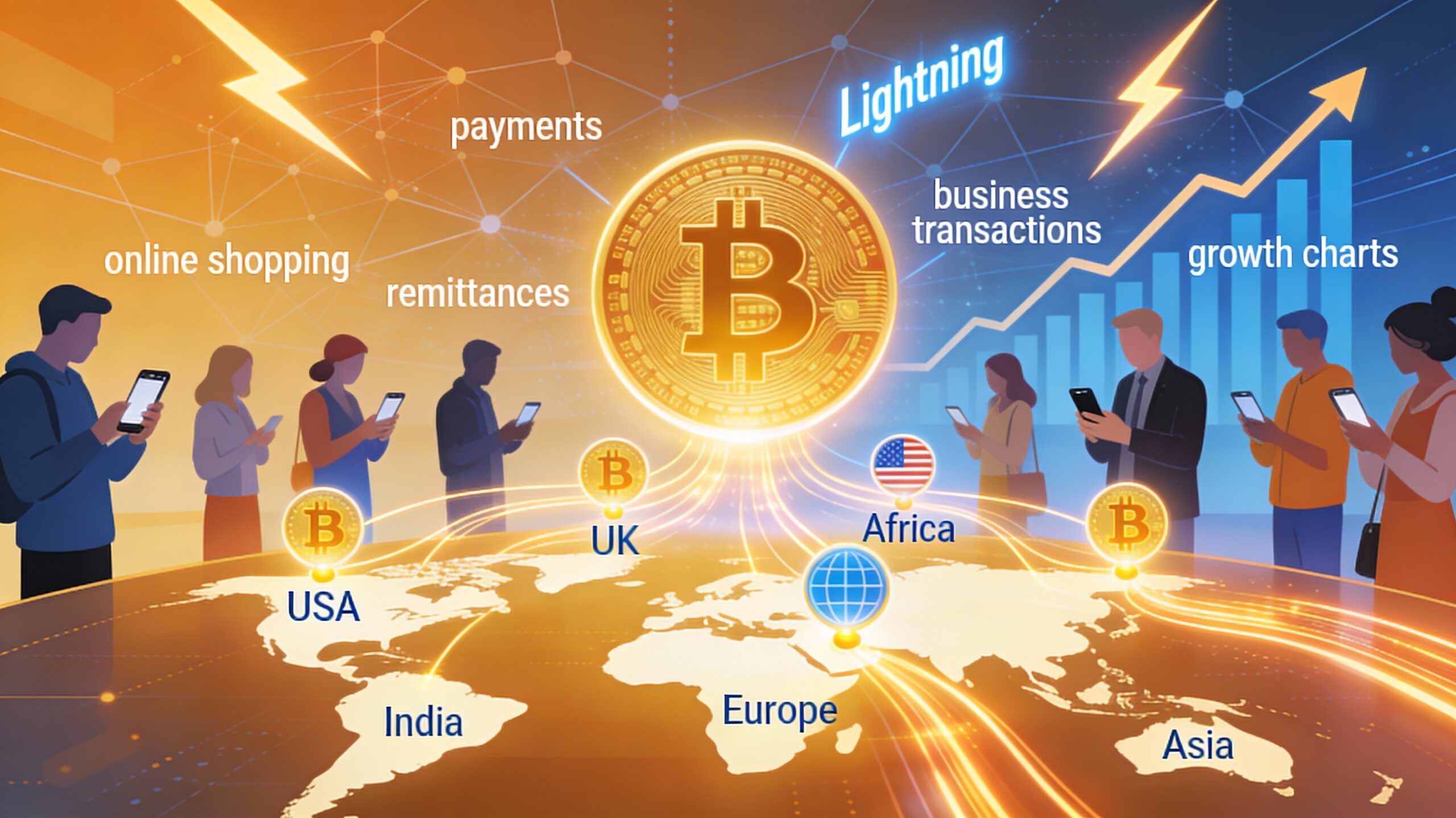
Bitcoin has evolved from a niche experiment into the world’s leading digital asset, powering seamless cross-border payments and challenging traditional banking systems. By 2025, millions use Bitcoin for remittances, online shopping, and savings, thanks to faster networks and wider merchant adoption. This shift is reshaping how people worldwide handle money in a digital-first economy.
From Speculative Asset to Practical Payment Tool
Launched in 2009, Bitcoin started as a decentralized alternative to fiat currencies amid the global financial crisis. Early adopters saw it as “digital gold” for storing value, but recent upgrades like the Lightning Network have made it viable for everyday transactions. Micro-payments now settle in seconds for fractions of a penny, rivaling Visa or PayPal speeds.
Businesses from El Salvador to Europe accept Bitcoin directly, converting it to local currency instantly if needed. This utility drives adoption, especially in regions with unstable banks or high remittance fees.
Key Advantages Driving Bitcoin Adoption
Bitcoin’s appeal lies in its core features that solve real-world financial pain points:
- Borderless Transfers: Send value to anyone, anywhere, without intermediaries. A worker in the UAE can pay family in India instantly, bypassing 7% wire fees.
- Financial Sovereignty: Users control their funds via private keys—no account freezes or censorship.
- Inflation Hedge: With a fixed 21 million supply cap, Bitcoin protects against currency devaluation in high-inflation countries like Argentina or Turkey.
- Privacy Focus: Transactions are pseudonymous, offering discretion without full anonymity.
- 24/7 Accessibility: Networks operate nonstop, unlike banks with holidays or cutoffs.
These benefits attract freelancers, e-commerce sellers, and unbanked populations globally.
Bitcoin in E-Commerce and Retail
Major retailers now integrate Bitcoin payments. Platforms like Shopify and WooCommerce plugins let small businesses accept BTC alongside cards. In 2025, over 15,000 merchants worldwide—from coffee shops in Miami to tech stores in Tokyo—use it via apps like Strike or Cash App.
Travel sites offer Bitcoin bookings for flights and hotels, appealing to digital nomads. Even luxury brands experiment with NFT-linked purchases, blending crypto with high-end retail.
Enterprise and Institutional Embrace
Corporations hold billions in Bitcoin reserves. MicroStrategy and Tesla treat it as a treasury asset, outperforming bonds. Payment giants like PayPal and Square enable BTC buying/selling for 400 million users.
Central banks explore Bitcoin-backed stablecoins, while countries like Bhutan mine it using hydropower. This institutional buy-in stabilizes prices and boosts confidence.
Challenges and Solutions in Bitcoin’s Mainstream Path
Bitcoin faces hurdles like volatility and scalability, but innovations address them:
- Lightning Network: Handles millions of transactions per second off-chain, with atomic swaps for trustless exchanges.
- Layer-2 Solutions: Ark and Statechains improve privacy and efficiency.
- Regulatory Clarity: The US and EU frameworks now treat Bitcoin as property/commodity, reducing uncertainty.
Energy concerns diminish as mining shifts to renewables—over 50% green by 2025.
Bitcoin’s Impact on Emerging Markets
In Africa and Latin America, Bitcoin empowers the unbanked. Nigerians use it to dodge naira devaluation; Venezuelans preserve wealth amid hyperinflation. Mobile wallets like Muun make it accessible via basic phones.
Remittances via Bitcoin cut costs from 6.5% (Western Union average) to under 1%, saving billions annually for migrant workers.
The Road Ahead: Bitcoin in Web3 and DeFi
Bitcoin integrates with decentralized finance (DeFi). Wrapped BTC on Ethereum enables lending/yield farming, unlocking $10B+ liquidity. Ordinals and Runes add smart contracts, evolving it beyond payments.
By 2030, experts predict Bitcoin as a global reserve asset, alongside gold in portfolios. ETFs and futures markets already trade trillions in volume.
Security Best Practices for Bitcoin Users
To thrive with Bitcoin:
- Use hardware wallets like Ledger for cold storage.
- Enable multi-signature for large holdings.
- Verify addresses with QR codes.
- Diversify via multisig setups.
Education reduces scams, ensuring safe adoption.
Final Thoughts
Bitcoin’s transformation from fringe currency to global payment rail marks a financial revolution. It empowers individuals, disrupts banks, and fosters economic freedom across borders. As adoption surges—from street vendors to Fortune 500 treasuries—Bitcoin isn’t just money; it’s the internet’s native currency, redefining wealth in the digital age.