

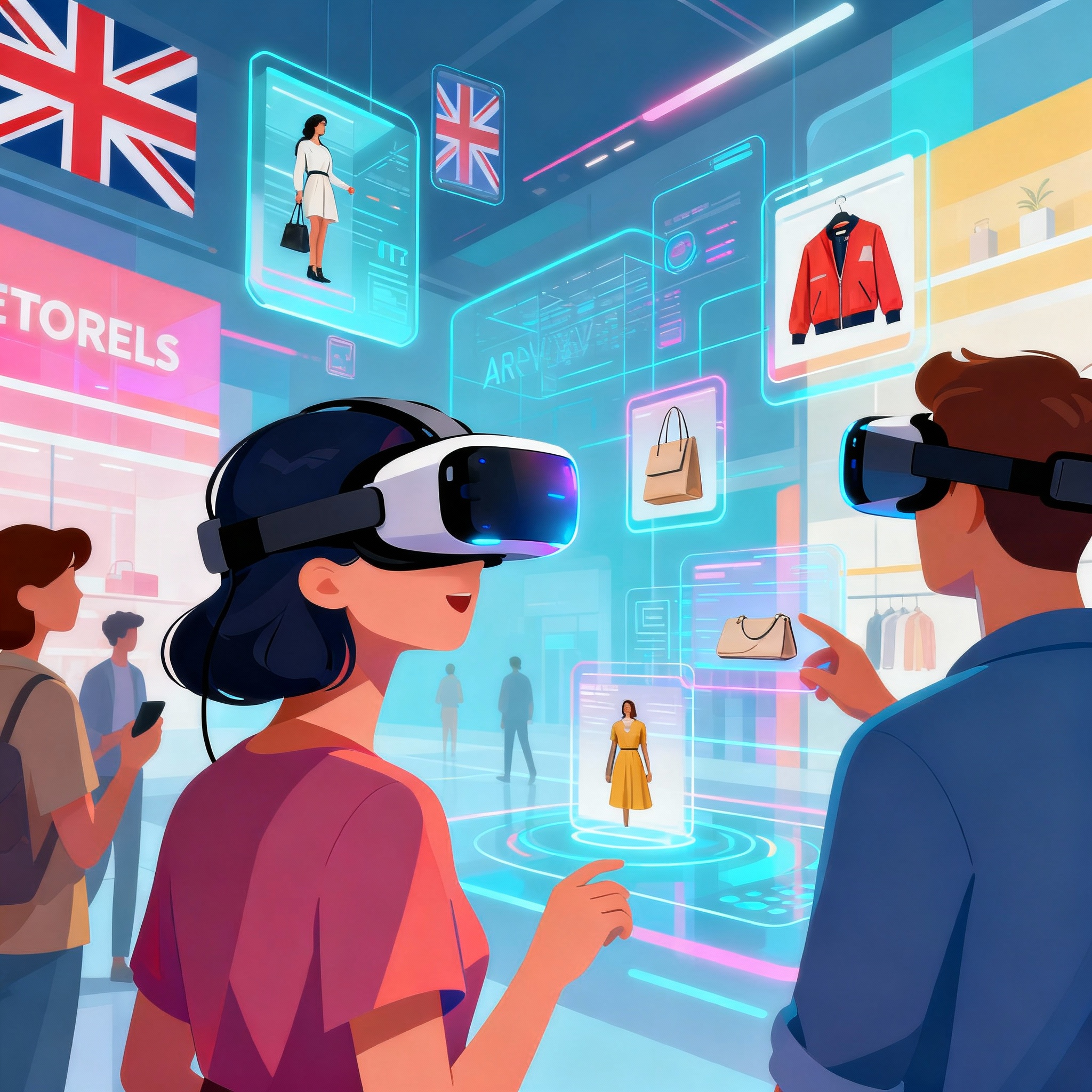
The New Era of Immersive Retail
The retail landscape in the US and UK has undergone a massive transformation over the past few years. With online shopping becoming the dominant mode of purchase for millions, retailers are searching for innovative ways to create deeper, more interactive experiences for consumers. Enter Augmented Reality (AR) and Virtual Reality (VR)—technologies that are no longer just futuristic experiments but are actively reshaping how brands engage with customers online.
From trying on clothes virtually to exploring 3D showrooms from home, AR and VR are redefining digital engagement by bridging the gap between physical and online shopping. Major US and UK retailers are at the forefront of this immersive revolution, using these tools to build trust, increase conversions, and strengthen brand loyalty.
AR and VR: The Building Blocks of Immersive Commerce
Before diving into specific examples, it’s important to understand how these technologies differ and work together:
- Augmented Reality (AR) overlays digital elements—like images, 3D objects, or text—onto the real world using a smartphone or tablet camera. It enhances reality rather than replacing it.
- Virtual Reality (VR) immerses users in a fully digital environment, often using headsets like Meta Quest or Apple Vision Pro, offering a 360-degree simulated shopping experience.
In online retail, AR allows customers to visualize products in real spaces—like seeing how a sofa fits in their living room or how a pair of sneakers looks on their feet. VR, on the other hand, transports them into virtual stores or branded worlds, replicating the physical experience of browsing and discovering products.
1.Fashion Retailers Leading the AR Revolution
The fashion industry in both the US and UK has been one of the earliest adopters of AR technology to boost engagement.
a. Virtual Try-Ons: Retail giants like ASOS (UK) and Nike (US) are transforming how customers shop for clothing and accessories. ASOS introduced AR features allowing users to see outfits on 3D models of different body types, enhancing inclusivity and reducing return rates. Similarly, Nike’s “Nike Fit” uses AR to scan customers’ feet through their mobile app, helping them find the perfect shoe size without visiting a store.
b. Enhancing Confidence and Reducing Returns: By allowing shoppers to visualize how apparel or accessories will look in real life, AR significantly cuts down on purchase hesitation. UK-based brand Burberry launched an AR campaign through Google Search that lets users preview handbags or sneakers at home, increasing engagement rates and online dwell time.
These virtual try-ons not only improve customer satisfaction but also build stronger emotional connections between consumers and brands—an essential factor in today’s competitive e-commerce space.
2.Home Décor and Furniture Retail: Visualizing Space Through AR
For home décor and furniture brands, AR and VR have become game changers.
a. IKEA Place: The Swedish giant IKEA, popular in both the US and UK, launched its “IKEA Place” app that lets users visualize furniture in their homes at scale using AR. This tool removes the uncertainty of online furniture shopping by helping customers see how products will fit and match their interior spaces.
b. Wayfair’s VR Showrooms: US-based Wayfair took things a step further with VR showrooms that allow customers to virtually walk through decorated spaces. This gives buyers a realistic sense of size, proportion, and aesthetic appeal—something traditional images could never achieve.
As consumers spend more time online, the ability to “experience” products virtually makes the shopping process more personal and confident, leading to higher conversion rates.
3.Beauty and Cosmetics: AR as the Ultimate Engagement Tool
The beauty industry has become a pioneer in using AR to enhance online engagement.
a. Sephora’s Virtual Artist: Sephora, operating across the US and UK, introduced its Virtual Artist tool, which lets users test makeup products—like lipstick, foundation, or eyeshadow—through their smartphone camera. This AR experience gives shoppers instant, personalized results and encourages social sharing, amplifying brand exposure.
b. L’Oréal’s Virtual Try-On: Similarly, L’Oréal acquired the AR company ModiFace, enabling customers to virtually try makeup, hair colors, and skincare products in real-time. The result has been a surge in engagement, particularly among Gen Z consumers who prefer interactive, tech-driven shopping experiences.
By using AR, beauty brands are transforming what was once a tactile, in-store experience into a digital one—without losing the emotional satisfaction of experimentation.
4.VR Retail Stores: Creating Immersive Brand Worlds
While AR dominates the e-commerce space, VR is beginning to shape the future of virtual retail environments.
a. Virtual Flagships: Brands like Tommy Hilfiger and Ralph Lauren have experimented with VR flagship stores, allowing customers in the US and UK to “walk” through virtual spaces, browse collections, and interact with digital sales assistants. These experiences mimic in-store shopping, complete with music, visual displays, and 3D environments.
b. The Rise of the Metaverse Retail: In 2025, many retailers are testing immersive brand spaces within metaverse platforms. British retailer Selfridges launched a virtual store where visitors can explore art, fashion, and NFTs in a 3D environment—blurring the line between retail and digital entertainment.
VR doesn’t just drive sales; it builds brand storytelling and emotional engagement, something traditional e-commerce sites can’t replicate.
5.Measuring the Impact: Engagement, Conversions, and Loyalty
US and UK retailers using AR/VR report significant improvements across several metrics:
- Increased Engagement: Interactive experiences lead to longer session times and repeat visits.
- Higher Conversion Rates: AR visualization reduces uncertainty, making consumers more confident to purchase.
- Lower Returns: Customers who “see before they buy” are less likely to return items.
- Brand Loyalty: Immersive experiences create memorable interactions, encouraging long-term relationships.
For example, a report from Deloitte found that 61% of consumers prefer retailers offering AR experiences, while Shopify noted that 3D/AR-enabled products see up to 94% higher conversion rates.
6.The Future: Hyper-Personalization and AI Integration
Looking ahead, the next phase of AR/VR retail in the US and UK will revolve around AI-driven personalization. Imagine trying on clothes that adapt to your body shape in real-time or visiting a VR store that rearranges itself based on your preferences.
Retailers are also exploring cross-platform integration, allowing users to seamlessly move between AR apps, VR worlds, and physical stores through synchronized shopping profiles. As hardware becomes more affordable and internet speeds faster, AR and VR will no longer be luxury technologies—they’ll be retail essentials.
Conclusion: The Immersive Future of Retail
The use of AR and VR by US and UK retailers marks a significant evolution in how consumers interact with brands. What started as a novelty has become a necessity for driving engagement in a saturated online marketplace. By blending the convenience of e-commerce with the richness of physical shopping, these immersive technologies are setting new standards for digital retail experiences.
As innovation continues, one thing is clear: the future of online retail is not just clickable—it’s experiential, immersive, and deeply human.