

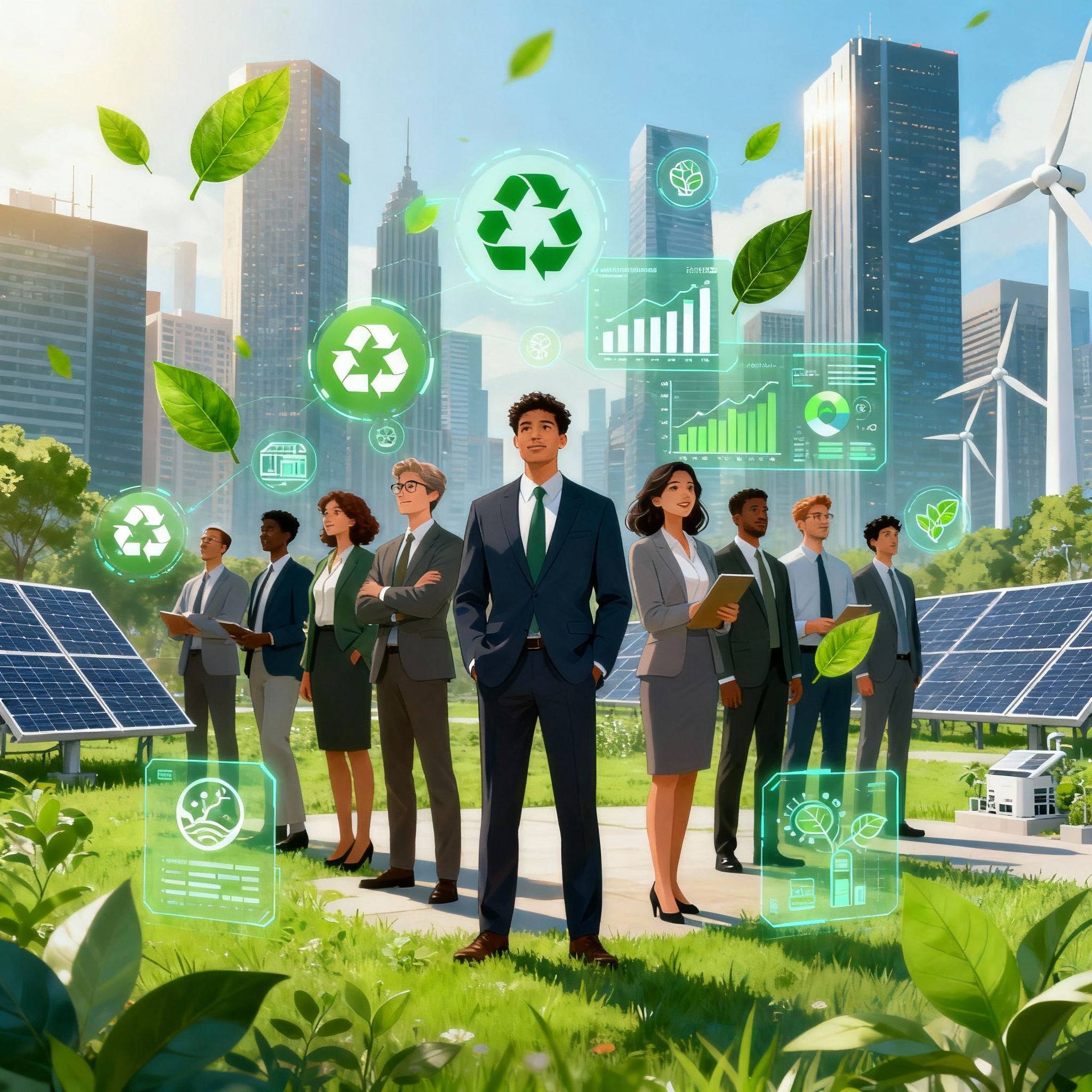
In the modern business landscape, sustainability is no longer a niche concept or a marketing gimmick—it has become a mainstream expectation. From multinational corporations to small startups, businesses are under growing pressure from consumers, investors, and governments to operate responsibly and adopt green business models. This transformation isn’t just about protecting the planet; it’s about building a future-ready organization that thrives in an economy driven by environmental awareness, innovation, and long-term value.
The Rise of Sustainability as a Core Business Priority
For decades, sustainability was considered optional—a nice-to-have feature that only a few forward-thinking companies embraced. But as global challenges like climate change, deforestation, and pollution escalate, the urgency to act sustainably has reached unprecedented levels. Consumers now demand transparency and accountability from the brands they support.
A recent global survey shows that more than 70% of Gen Z and millennial consumers prefer to buy from companies that are eco-conscious, even if it means paying slightly more. Investors, too, are channeling funds toward firms that integrate Environmental, Social, and Governance (ESG) criteria into their operations. Governments are implementing stricter climate policies, while regulators are requiring public disclosure of environmental performance.
In this environment, sustainability isn’t just about image—it’s about survival. Companies that fail to adapt risk losing market share, customer trust, and access to capital.
Understanding Green Business Models
A green businhttps://en.wikipedia.org/wiki/Sustainable_businessess model is one that creates value while minimizing environmental harm and promoting social well-being. Unlike traditional models that prioritize profit over everything else, sustainable models balance financial success with ecological and social impact.
Here are some key characteristics of green business models:
- Circular Economy Practices: Instead of the traditional “take-make-dispose” approach, the circular economy focuses on reusing, recycling, and refurbishing materials. This reduces waste and extends the lifespan of resources.
- Renewable Energy Adoption: Companies are shifting from fossil fuels to renewable sources like solar, wind, and hydro energy to reduce their carbon footprint.
- Sustainable Supply Chains: Businesses are partnering with suppliers that follow ethical and eco-friendly practices, ensuring that sustainability runs through the entire value chain.
- Eco-Innovation: Sustainable businesses innovate products and processes to reduce energy use, water waste, and emissions. For example, packaging made from biodegradable materials or digital solutions that replace paper usage.
- Carbon-Neutral Goals: Many organizations are pledging to achieve net-zero emissions by investing in renewable projects and offsetting unavoidable emissions through carbon credits or reforestation initiatives.
These models not only benefit the environment but also improve efficiency, reduce long-term costs, and strengthen brand reputation.
Consumers Are Driving the Green Revolution
The shift toward sustainability is being driven largely by consumer demand. Today’s buyers are more informed and socially conscious than ever before. They want to know where products come from, how they’re made, and what impact they have on the environment.
Brands like Patagonia, Tesla, and Unilever have set powerful examples by integrating sustainability into their core values and marketing strategies. Patagonia’s “Don’t Buy This Jacket” campaign encouraged consumers to buy less and recycle more, boosting the company’s credibility and customer loyalty. Tesla revolutionized the automotive sector by proving that electric vehicles can be both eco-friendly and desirable.
This consumer-driven transformation is pushing even traditional industries—like fashion, food, and construction—to rethink their operations. Businesses that align with this green mindset are finding new opportunities for growth and innovation.
The Role of Technology in Enabling Sustainability
Technology plays a crucial role in helping businesses transition to greener models. Advanced tools like Artificial Intelligence (AI), Internet of Things (IoT), and Blockchain are enabling smarter, more sustainable operations.
- AI is optimizing resource use by predicting demand, improving energy efficiency, and minimizing waste in production.
- IoT sensors monitor water, energy, and waste levels in real-time, helping companies make data-driven sustainability decisions.
- Blockchain is being used to create transparent supply chains, verifying that materials are sourced ethically and sustainably.
For example, AI-powered energy management systems can reduce power consumption by 20–30%, while blockchain can help prevent illegal deforestation by tracking timber sources. These technologies make sustainability measurable, manageable, and profitable.
Government Policies and Global Commitments
The rise of sustainability is also fueled by international and national commitments. The Paris Agreement and the United Nations Sustainable Development Goals (SDGs) have set clear targets for reducing carbon emissions and promoting responsible consumption.
Governments around the world are introducing incentives like tax credits for renewable energy projects, subsidies for electric vehicles, and penalties for high emissions. Businesses that align with these goals not only stay compliant but also gain a competitive edge in attracting funding and global partnerships.
The Economic Case for Sustainability
Contrary to the misconception that sustainability increases costs, studies have shown that green business models lead to long-term profitability. Energy efficiency reduces operational costs, while circular design minimizes raw material expenses. Moreover, sustainable branding enhances customer loyalty and opens new market opportunities.
Companies that proactively embrace sustainability are also more resilient during crises. For instance, organizations that invested in renewable energy faced fewer disruptions during global oil price fluctuations. In short, sustainability is both a moral and strategic investment.
The Future: Green Is the New Standard
Looking ahead, sustainability will define the next generation of successful businesses. By 2030, most global companies are expected to publish detailed sustainability reports and operate under net-zero commitments.
Consumers, employees, and investors will continue to reward brands that take meaningful climate action. Businesses that adopt green practices today will not only reduce environmental impact but also secure their relevance in a rapidly changing market.
The message is clear: sustainability is no longer optional—it’s the new normal. To stay competitive, every business must embed environmental and social responsibility at the core of its operations. Those who act now will lead the green economy of tomorrow.